

Last Updated on April 2, 2026 by allieddispatch | Published: March 20, 2026
By Allied Dispatch UK
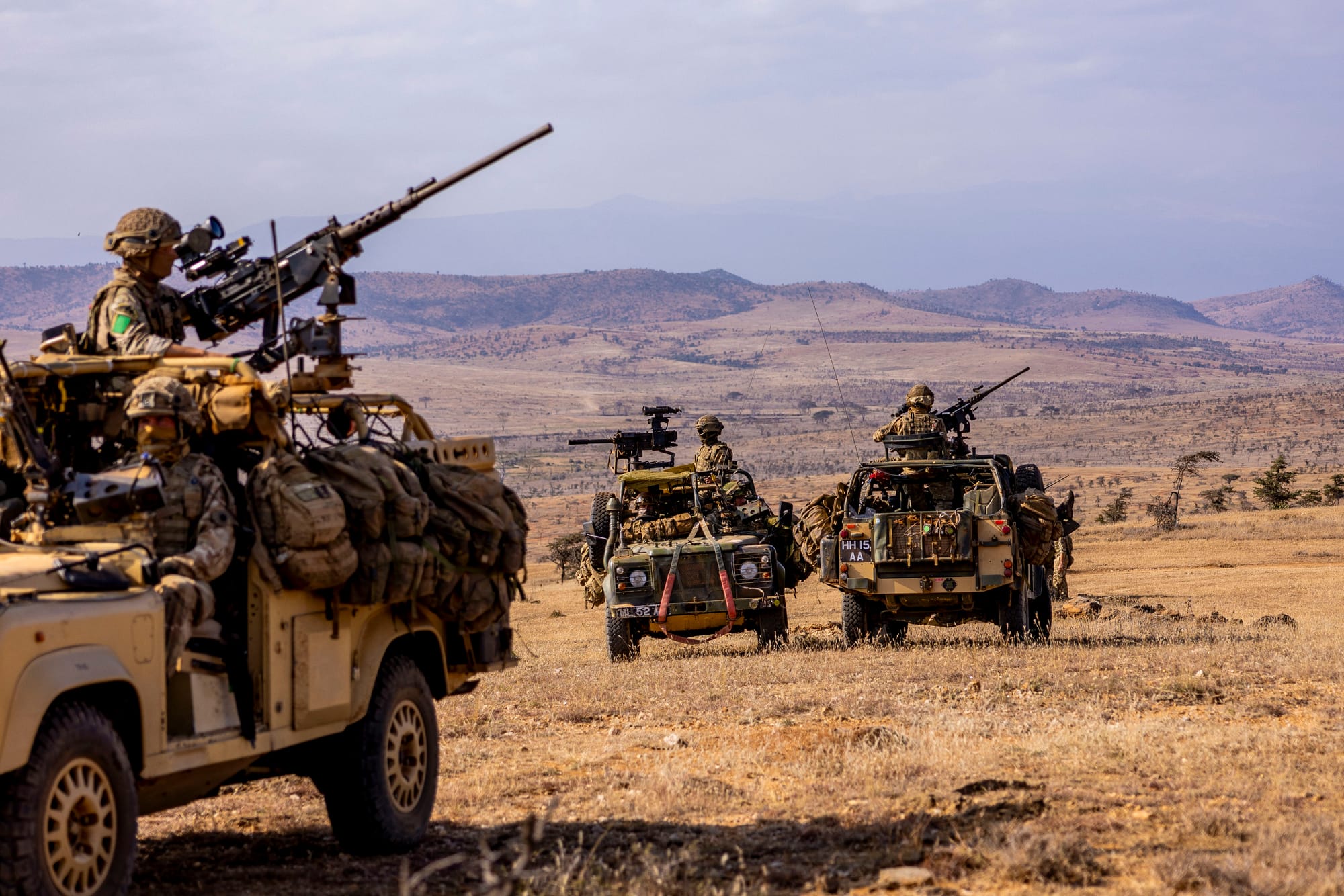
WHITEHALL — The Ministry of Defence has officially confirmed the retirement of the British Army’s iconic Land Rover fleet. After seven decades of service on every battlefield from the deserts of North Africa to the hedgerows of Northern Ireland and the plains of Salisbury, the “Landy” is finally being put out to pasture.
The Ministry of Defence announced that the phase-out will begin immediately as part of a wider modernisation of the Army’s “Light Mobility” category. The goal is to move toward a more sustainable, technologically advanced fleet that meets the demands of 21st-century warfare.
The End of a 70-Year Legend
Since it first rolled into service, the Land Rover has been the backbone of British military life. Whether it was the “Pink Panther” SAS variants or the armoured “Snatch” Land Rovers, the vehicle has been synonymous with the British soldier.
However, the MOD argues that the current fleet is increasingly difficult to maintain, lacks the integrated digital architecture required for modern “connected” warfare, and no longer meets modern safety or environmental standards.
The “Land Rover Replacement” Competition
While the MOD has “fired the starting gun” on the procurement process for a new Light Mobility Vehicle (LMV), no winner has been selected.
- The Requirement: The Army seeks a platform that is “modular by design,” capable of accommodating electronic warfare suites, and potentially featuring hybrid or electric powertrains.
- The Contenders: Several major defence contractors are expected to bid, but a final contract award and the subsequent “roll-out” of vehicles are likely years away.
Allied Dispatch UK Viewpoint: A Capability Gap in the Making?
At Allied Dispatch UK, we recognise that the Land Rover is an ageing platform. However, announcing “Lights Out” before a replacement has been chosen is concerning.
The MOD is once again falling into the trap of “Retirement Before Replacement.” By decommissioning a proven, albeit old, fleet of thousands of vehicles without a single new LMV on the parade square, the British Army faces a significant “mobility gap.”
In an era where “readiness” is the MOD’s new watchword, we must ask: How does reducing the number of available hulls on the ground make the Army more ready? Transition periods in procurement are notoriously prone to delays. If the LMV competition hits a snag—as so many UK armoured vehicle programs have in the past—the Army risks being left “on foot” for its light utility needs. We believe the Land Rover should have been maintained in a “sustainment” phase until the first 1,000 units of its successor were verified and operational. To turn the lights out now is a gamble on a future that hasn’t been bought yet.