

Last Updated on April 25, 2026 by Allied Dispatch UK | Published: April 19, 2026
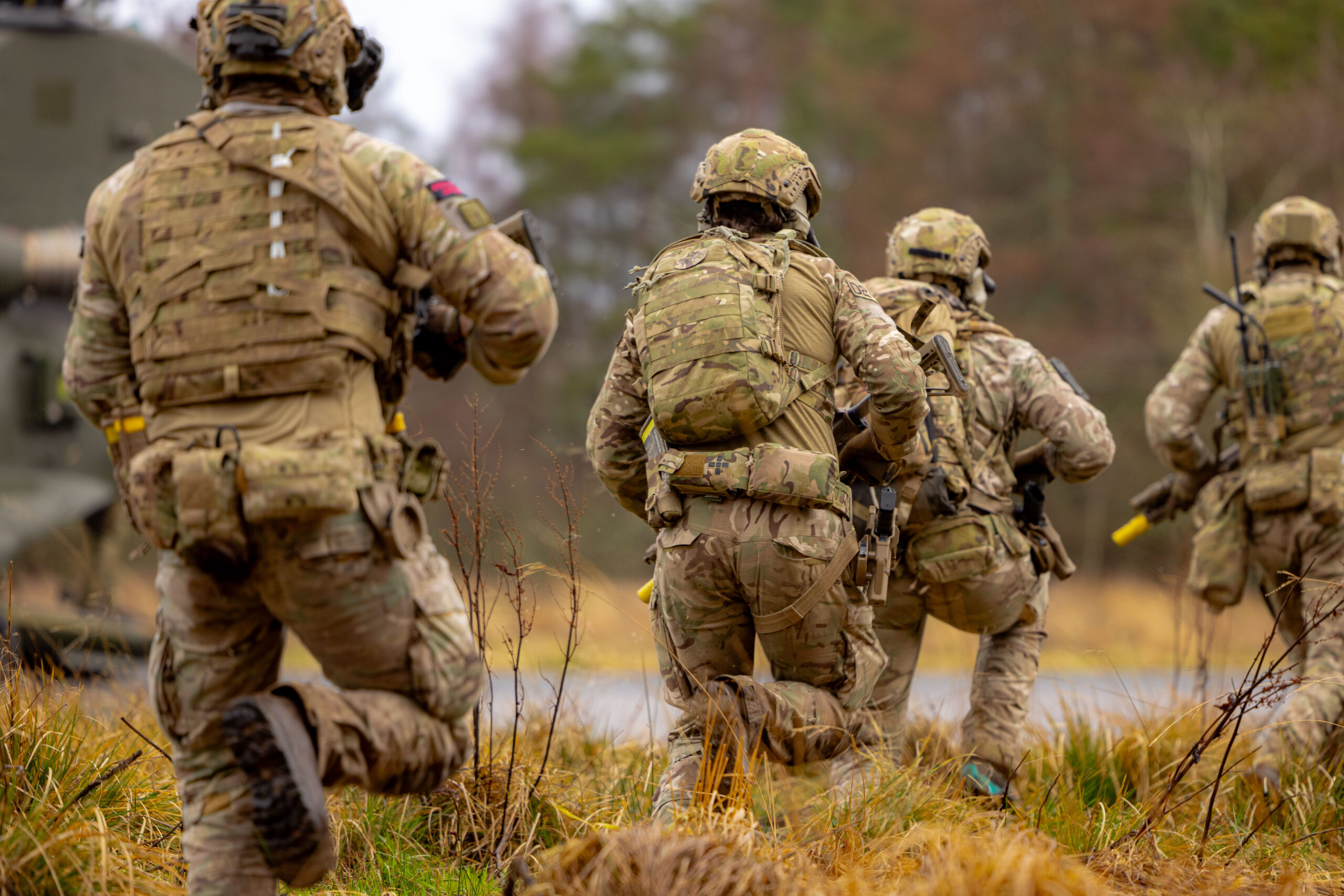
For the first time in generations, the word “conscription” is no longer confined to the dusty chapters of history books. As the global security situation shifts in 2026, a debate that was once politically radioactive is now being held in the corridors of Westminster, in military messes, and across social media. But is a return to National Service a genuine strategic plan, or simply the desperate cry of a nation realising it is “underinsured” for modern war?
Just this week, Lord Robertson, the lead author of the 2025 Strategic Defence Review (SDR), issued a blistering critique of the UK’s current state of readiness. He described the Treasury’s approach to defence as “corrosive complacency.” With the British Army currently at its smallest size since the Napoleonic era, the question of how the UK would “scale up” during a major continental crisis is no longer a theoretical exercise. It is an urgent, uncomfortable necessity.
The Historical Ghost: The “Government War Book”
To understand the current anxiety, we have to look back at the Government War Book. For decades, this top-secret manual outlined exactly how the British state would transition from peace to “Total War.” It wasn’t just about soldiers; it was about the mobilisation of industry, the rationing of food, and the legal frameworks for conscription.
In April 2026, Air Chief Marshal Sir Richard Knighton confirmed that a modern version of this “War Book” is being revived. While this doesn’t mean a draft is imminent, it proves that the Cabinet Office is finally looking at “Whole-of-Society” resilience. The debate over conscription is essentially a debate over the final chapter of that book: The Human Requirement.
The Case FOR: Rebuilding the “Mass” of the Nation
Those calling for a return to some form of mandatory service, including high-profile figures like former Defence Secretary Michael Fallon and various retired Generals, argue that the “Volunteer-Only” era is reaching a breaking point.
1. The “Numbers” Reality
The British Army currently hovers around 73,000 regular troops. In a high-intensity conflict against a peer-adversary, experts suggest we could see that entire force expended or exhausted within 6-12 months. Proponents of conscription argue that we lack the “Strategic Depth” (the reserve of trained bodies) to sustain a fight. They argue that a “Citizen Army” provides a deterrent that a small, elite force simply cannot.
2. National Resilience and Social Cohesion
Beyond the battlefield, supporters see National Service as a social “reset button.” They argue it would provide the “pre-war generation” with essential life skills: discipline, first aid, cyber-security, and physical fitness. In a world of hybrid threats—where power grids and water supplies are targets—a population with basic military or civil defence training is a much harder target to “break.”
3. The “Nordic” Blueprint
The most popular “middle ground” in 2026 is the Scandinavian Model. In countries like Sweden and Norway, conscription is selective. Every 18-year-old is screened, but only the most motivated and physically fit (around 10-15%) are actually called up. This makes military service a “prestigious competition” rather than a “press-gang.” Supporters argue the UK could adopt this “Total Defence” model to bolster our reserves without the social upheaval of a 1940s-style draft.
The Case AGAINST: The Professional Military Nightmare
Despite the headlines, the Ministry of Defence and the current “Top Brass”, including General Sir Roly Walker, remain staunchly opposed to the idea. Their reasons are not political, but practical.
1. Quality Over Quantity
Modern warfare is a high-tech endeavour. Operating a Challenger 3 tank, a Thales drone system, a UAV, or an F-35 requires months, if not years, of specialised training. Military leaders argue that a 12-month conscript would barely learn the basics before their time was up. They fear that “dragging” unwilling recruits into the service would dilute the “warrior spirit” and professional excellence of our elite volunteer units.
2. The “Instructor Drain”
This is the logistical “killer” for the MOD. To train 100,000 conscripts, you would have to pull your best staff away from the front line to act as instructors. In 2026, with the UK already struggling to maintain all its deployment schedules, the UK military argues it simply cannot afford to turn its fighting force into a “teaching force.”
3. The Economic Shock
Pulling hundreds of thousands of young people out of the workforce or higher education during a period of economic fragility would be an immense gamble. Critics argue that the UK’s strength lies in its “Soft Power” and its tech economy. Forcing a software engineer or a medical student to spend a year digging trenches is seen by many as a catastrophic waste of national talent.
What is the Current Plan? (The “Middle Way”)
Officially, the government’s stance remains: “There are no plans for a return to conscription.” Instead, the UK is betting on the Armed Forces Foundation Scheme, launched in March 2026. This “Military Gap Year” is a voluntary pilot program for those under 25. It offers a year of paid training across the Army, Navy, or RAF with no long-term commitment. It is essentially a “soft-launch” for National Service, a way to test the public appetite and build a “Ready Reserve” without the legal requirement of a draft.
However, the shadow of the Strategic Defence Review looms large. If the “Foundation Scheme” fails to fix the recruitment crisis, and if the threat from the East continues to escalate, the “voluntary” nature of UK service may be the next thing to be reviewed.
The Allied Dispatch View
At Allied Dispatch, we spend our time reporting on matters such as the Typhoons on deployment, the specs of a new piece of equipment, and the 120,000 drones headed to Ukraine. But equipment is just “expensive metal” without the personnel to operate it.
The debate over conscription is really a debate about what kind of country we want to be. Are we a nation that pays a small number of professionals to do our fighting for us, or are we moving toward a “Total Defence” society where every citizen has a stake in national security?
As General Sir Patrick Sanders famously warned, we are the “pre-war generation.” If he is right, the luxury of choosing how we serve might soon be a thing of the past.
What do you think?
The lines are drawn. On one side, a call for national discipline and “mass” to deter an aggressor. On the other hand, a commitment to a professional, high-tech, voluntary force that values quality over sheer numbers.
- Would you support a selective “Nordic-style” service for the UK?
- Should we focus on fixing the volunteer recruitment crisis before even mentioning the “C-word”?
- Is “Civil Defence” (hospitals, power, cyber) a better option for a modern National Service than, say, the Infantry?
This is your platform. Let us know your thoughts in the comments below. We want a balanced, respectful debate on the future of our nation’s defence.