

Last Updated on April 21, 2026 by allieddispatch | Published: April 21, 2026
The Royal Navy has reached a significant six-week milestone in the Eastern Mediterranean, with its helicopter crews flying hundreds of hours of high-stakes missions to safeguard Cyprus from persistent drone and missile threats. This isn’t just a patrol; it is an active, layered air-defence operation protecting the UK’s most critical hub in the Middle East.
Since the escalation in early March 2026, the skies over the Sovereign Base Areas (SBAs) have been held by a unique partnership of “eyes” and “teeth.”
The Eyes: Merlin Mk2 “Crowsnest”
Providing the essential top cover are the Merlin Mk2 helicopters from 820 Naval Air Squadron. Typically found protecting the UK’s aircraft carriers, these “Crowsnest” Merlins have been deployed to RAF Akrotiri to act as a flying radar station.
- Over-the-Horizon Sight: Flying at high altitudes, the Merlin’s powerful radar can scan hundreds of square miles of the Mediterranean. They spot low-flying, “one-way” attack drones long before they reach the coast, providing a vital “early warning” to ground teams and interceptor jets.
- The Quarterback: The Merlin crews aren’t just observers; they coordinate the battle. They share their “air picture” directly with HMS Dragon (the Type 45 destroyer offshore) and the RAF’s F-35 Lightnings, ensuring no threat slips through the net.
The Teeth: Wildcat HMA2 & Martlet
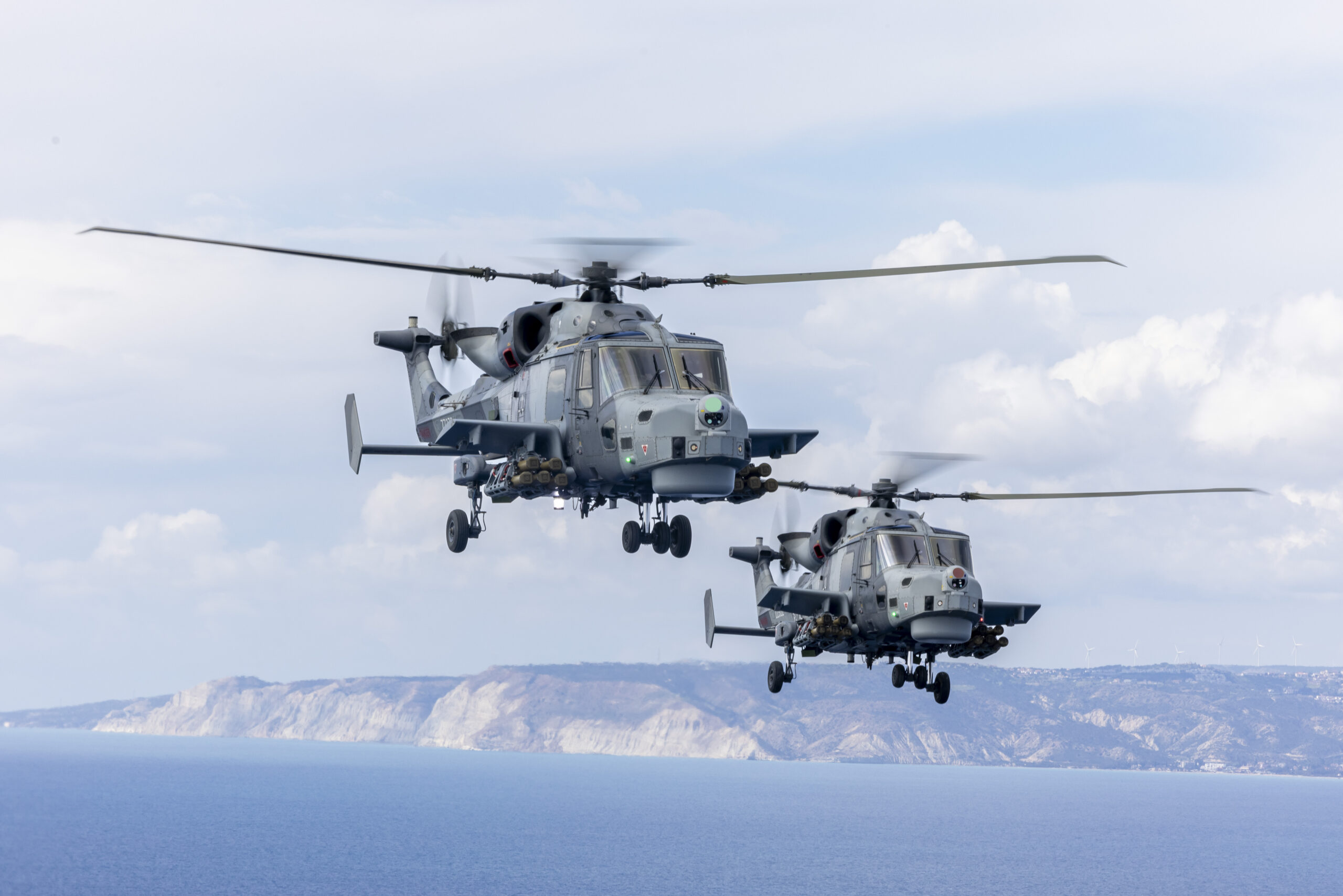
Once the Merlins identify a target, Wildcats from take over. The Wildcat HMA2 has proved to be the perfect counter-drone platform.
- Martlet Precision: The Wildcat is armed with the Martlet missile. While a Typhoon jet is “overkill” for a small, slow-moving drone, the Martlet is designed specifically for this role. It is fast, agile, and relatively cost-effective, making it the ideal “drone killer.”
- Daily Sorties: The Wildcats have already clocked over 100 hours of combat sorties in this deployment, often launching in pairs to provide a mobile “wall” of fire against low-altitude threats that try to hide in the island’s rugged terrain.
Operation Luminous: A Team Effort
The last six weeks have demonstrated the power of Operation Luminous. By integrating the Royal Navy’s helicopters into a network that includes the Sea Viper missiles of HMS Dragon and the RAF’s Fast Jets, the UK has created a “no-fly zone” for hostile munitions around its bases.
The Allied Dispatch View
At Allied Dispatch, we say the Merlin/Wildcat combo is the unsung hero of 2026. This mission proves that the Royal Navy’s Fleet Air Arm is no longer just for carrier ops; it is now a critical part of the UK’s “Home Defence” capability on foreign soil.
The Merlin/Wildcat team provides a “mobile shield” that fixed radar simply can’t match. As we approach the end of April, the question is how long this high-tempo “Shield” can be maintained without further reinforcements from the UK.
What do you think?
The “Crowsnest” Merlins are usually reserved for the Aircraft Carriers.
- Is using them for land-based defence in Cyprus the right strategic move, or does it leave our carriers vulnerable?
- Could the Wildcat/Martlet combo be the answer to the global “drone swarm” threat?
- Should the UK invest in more dedicated “drone-hunter” squadrons?
Join the conversation in the comments below.