

Last Updated on April 6, 2026 by allieddispatch | Published: April 5, 2026
While the world’s eyes have been fixed on the high-tech ballet of refuelling tankers, Typhoons, and the multi-million-pound C-UAS (Counter-Unmanned Air Systems) assets protecting British interests on Cyprus, a much older, and arguably more reliable form of security is working double shifts on the tarmac.
As regional tensions in the Middle East have surged over the last month, RAF Akrotiri has become the busiier than normal in the Mediterranean. But as more personnel and air assets arrive, the “target footprint” grows.
Doubling the Tempo
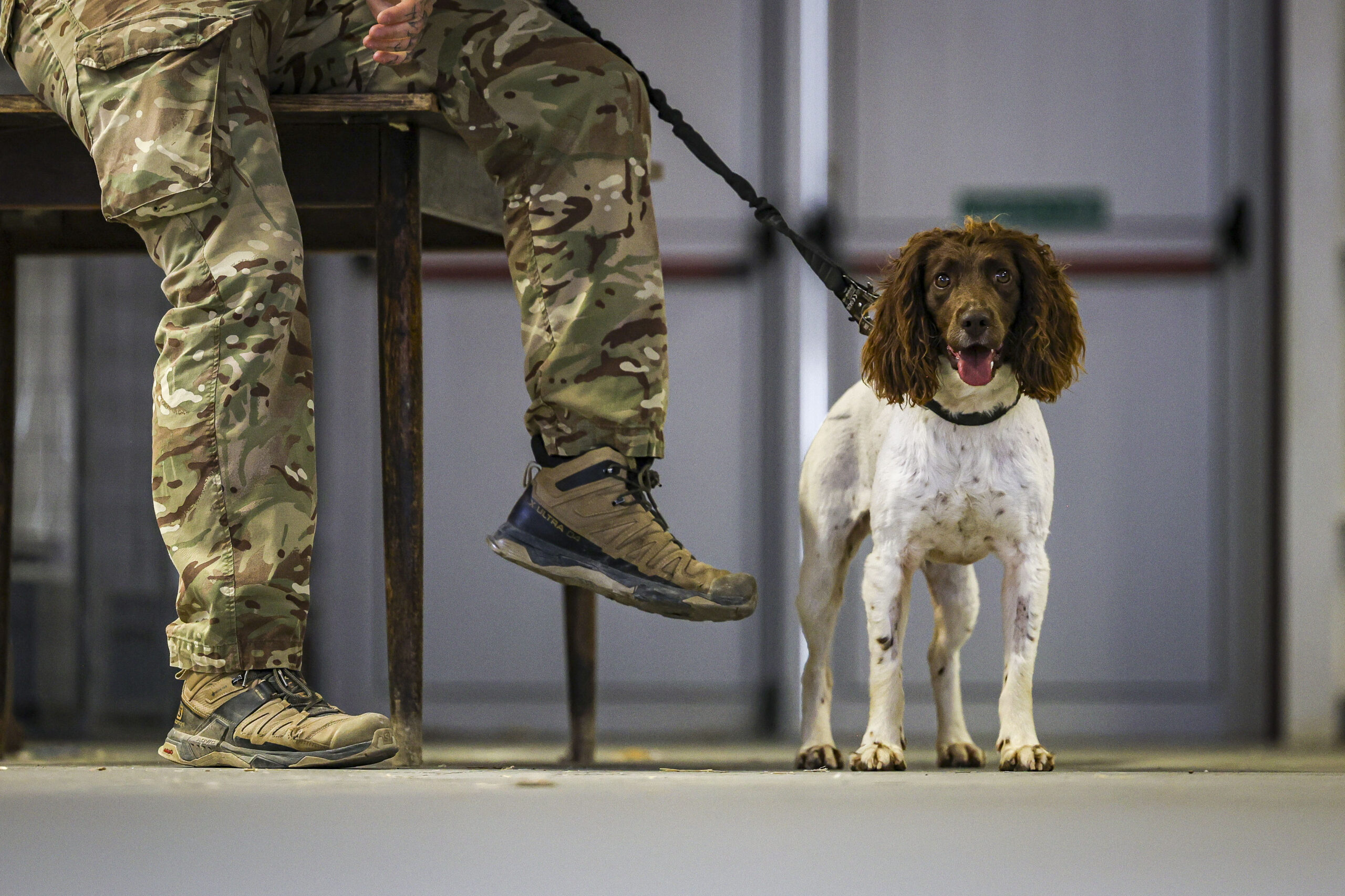
Recent reports from the Royal Air Force highlight a dramatic surge in activity for the Military Working Dog (MWD) Operational Capability Unit. Deployed to bolster the existing Akrotiri MWD Section, these teams have seen their operational tempo skyrocket.
In a recent three-week window leading into late March, the section clocked over 500 hours of foot patrols and 25 hours of harness time. This effectively doubles the unit’s conventional operational tempo, a direct response to the “increased threat risk” emanating from the Middle East.
The Low-Tech Edge in a High-Tech War
We often hear the staggering cost of modern warfare: the price per flight hour of a Typhoon or the sophisticated logic of a Sea Viper missile. Yet, the security of RAF Akrotiri’s ammunition stores and aircraft dispersals often comes down to a Corporal and their dog.
Corporal Sam, a MWD handler currently on station, notes that this deployment feels “different” because of the threat’s proximity. His team provides a variety of capabilities that no sensor suite can fully replicate:
- Patrol and Police: Maintaining a visible, aggressive deterrent around the base perimeter.
- Explosive Detection: Specialised “sniffing” out of weapons and IED threats that might target base infrastructure.
- Flexibility: Moving where the threat is, often in challenging conditions that would degrade electronic sensors.
The “Vital Safety Net”
The presence of these K9 teams isn’t just about security; it’s about the Force Multiplier effect. By securing the base, they empower the pilots, technicians, and other service personnel.
As senior leadership has noted, the dedication of these handlers has provided a “sense of normality” for families living on base during a period of extreme regional volatility.
Allied Dispatch View: It’s easy to get lost in the “Big Ticket” items of British defence spending. But as Akrotiri proves here, the safety of the UK’s most vital strategic hub in the Med doesn’t just rely on modern aircraft and missiles, it relies on four paws and a handler on a midnight patrol.