

Last Updated on April 25, 2026 by Allied Dispatch UK | Published: April 15, 2026
The U.S. Air Force and Northrop Grumman have announced a major acceleration in the development of the LGM-35A Sentinel—the next-generation Intercontinental Ballistic Missile (ICBM) set to replace the ageing Minuteman III.
As of April 2026, the programme is officially moving from digital blueprints to physical reality, with a clear roadmap leading to a first flight test in 2027 and Initial Operational Capability (IOC) by the early 2030s.
The “Digital to Hardware” Transition
The Sentinel programme is one of the first major weapon systems built entirely within a “Digital Ecosystem.” This approach, which Northrop Grumman mastered during the B-21 Raider development, allows engineers to identify design flaws in a virtual space before a single piece of metal is cut.
This digital-first strategy is now paying dividends as the programme enters its most physical phase yet:
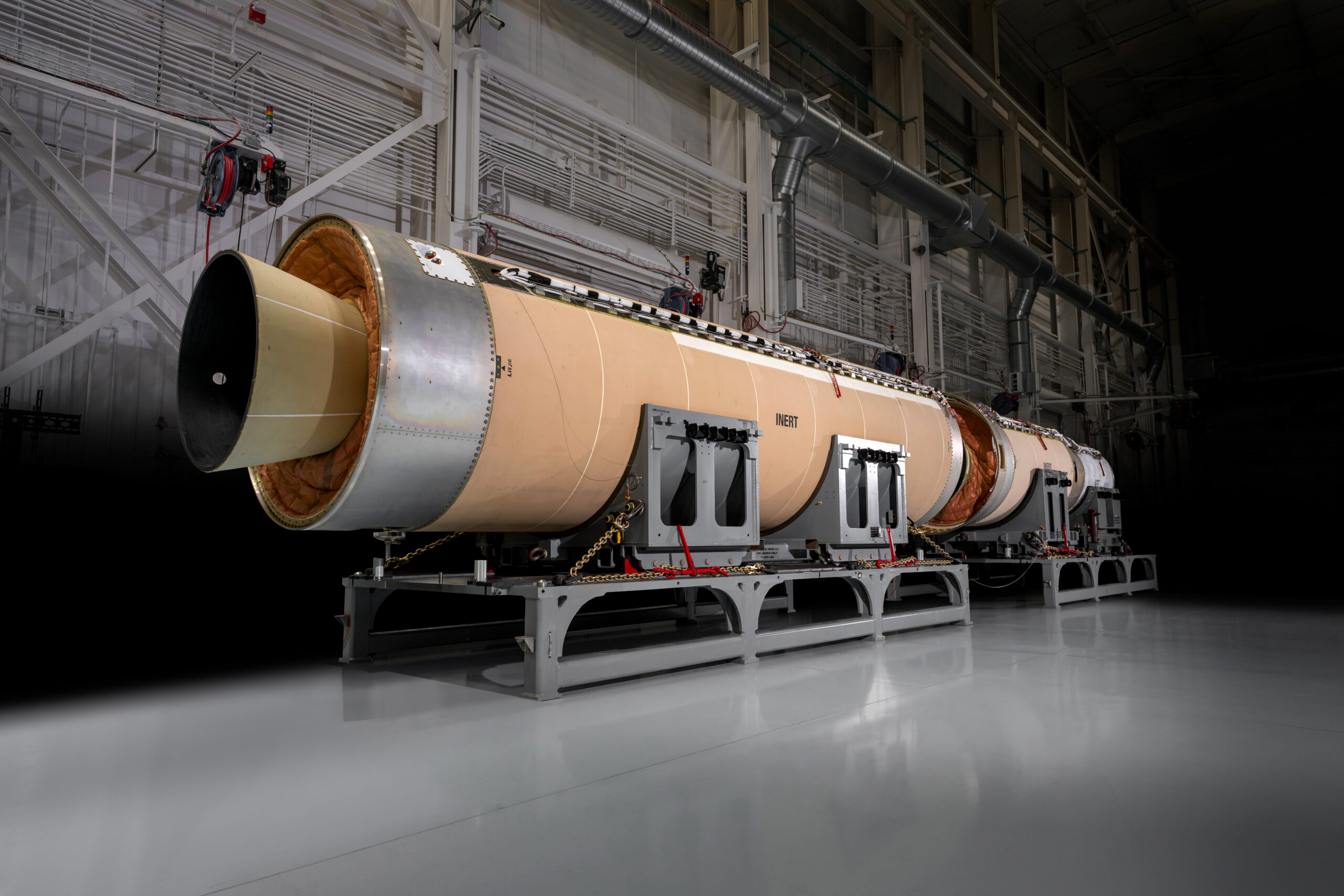
- Full Booster Assembly: Northrop Grumman has successfully assembled the first fully integrated three-stage booster.
- Propulsion Milestones: Every propulsive element of the missile has now been prototyped and tested.
- Production Status: Solid rocket motors for the first five planned flight tests are already in production.
Redefining the Ground Leg: New Silos vs. Old Infrastructure
A critical part of the 2026 update is the move toward Modular Launch Silos. Rather than simply refurbishing 1970s-era Minuteman III silos, the Air Force is shifting to a new architecture designed for easier maintenance and lower long-term costs.
The scale of this project is staggering:
- The Footprint: The programme spans 32,000 square miles across five U.S. states.
- The Workforce: Over 10,000 professionals and a supply chain of 500+ partners are currently driving the programme forward.
- Infrastructure Investment: Northrop Grumman has invested over $2 billion specifically in solid rocket motor capacity to ensure the program can scale rapidly as testing begins.
Why Sentinel Matters in 2026
The Minuteman III has been the backbone of the U.S. land-based deterrent for over 50 years. However, with global threats evolving, the Sentinel represents a “no-fail” mission to modernise the nuclear triad. The new system is designed to be resilient and adaptable, with a service life extending all the way to 2075.
The Allied Dispatch View
For our readers who follow global defence procurement, the Sentinel programme is a masterclass in modern acquisition. By using an “incremental” approach, fielding capabilities in phases, the Air Force is reducing the risk of the massive cost overruns that plagued the programme in its early years.