

Last Updated on April 25, 2026 by Allied Dispatch UK | Published: April 25, 2026
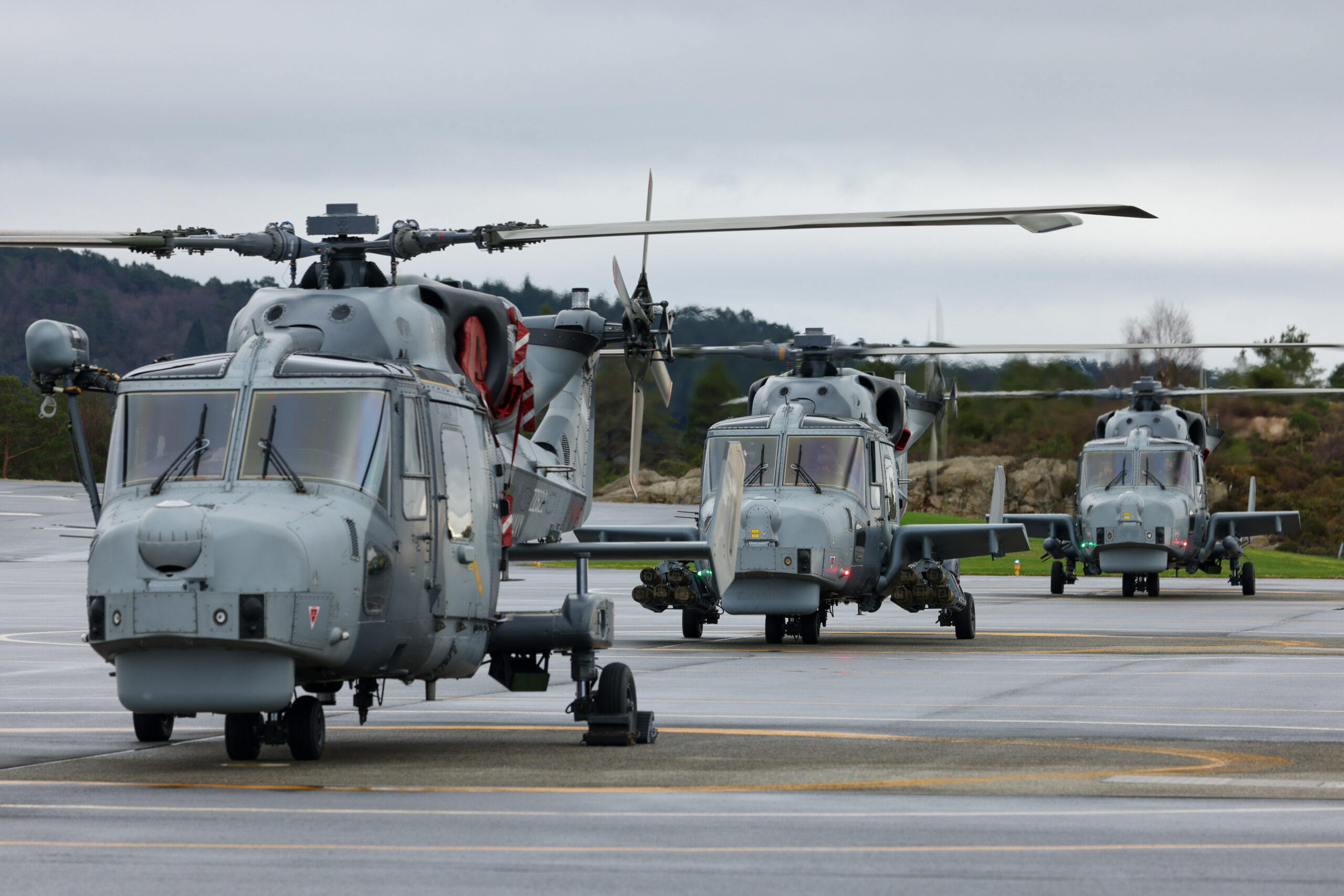
The fourth iteration of Exercise Tamber Shield officially commences on Monday, 27th April 2026, in the challenging waters of western Norway. This high-intensity exercise brings together Royal Navy Wildcat helicopters, P2000 patrol craft, and Norwegian missile boats to sharpen the UK’s ability to defend against fast-moving maritime threats.
Based at the Haakonsvern Naval Base in Bergen, the exercise focuses on the complex “cat and mouse” game played in the narrow inlets and fjords. This environment provides perfect cover for agile adversaries.
The Players: Small Boats and Aerial Scouts
The exercise features a dynamic mix of traditional and modern assets:
- The Wildcats: Aircrews from 815 Naval Air Squadron (based at RNAS Yeovilton) are using the fjords to hone their tactics for the Martlet missile system.
- The P2000s: Four Archer-class patrol boats—HMS Archer, Explorer, Exploit, and Biter– are providing the surface punch. These agile vessels act as both hunters and targets, testing the limits of their manoeuvrability.
- The “Eye in the Sky”: In a major boost to the exercise’s technical scope, the Puma uncrewed aerial system (UAS) from 700X Naval Air Squadron is being used to scout ahead of the helicopters, feeding real-time data back to the strike teams.
Hunting the “Skjold”
One of the primary challenges for the UK teams is tracking the Royal Norwegian Navy’s Skjold-class corvettes. Capable of reaching speeds of 60 knots and designed to blend into the landscape, these “stealth” boats are formidable opponents.
The exercise forces the Royal Navy teams to coordinate their aerial surveillance and surface patrols to “locate and destroy” these targets before they can disappear back into the deep fjord network.
Growth of an Alliance
First established in 2023, Tamber Shield has rapidly grown into a vital fixture for the Coastal Forces Squadron and the Fleet Air Arm. It provides the realistic, “high-clutter” environment needed to test the integration of drones with manned helicopters—a combination that is now central to modern littoral warfare.
Lieutenant Commander Ross Gallagher, the Wildcat detachment commander, said:
“Tamber Shield is one of the key highlights in the warfighting training calendar for our squadron, affording us the opportunity to sharpen our skills in a particularly challenging environment.”
Allied Dispatch Viewpoint: The Power of the Small and Fast
Exercise Tamber Shield proves that you don’t always need a multi-billion-pound destroyer to hold the line. When you integrate the Martlet-equipped Wildcat with P2000 patrol boats and Puma drones, you are building a highly effective “layered” defence. This exercise focuses on the agility and specialist skill sets needed to protect our coastal interests. In the fjords of Norway, our personnel are learning how to turn “small” assets into “big” problems for any potential adversary. This is exactly the kind of specialist, high-tech training that hopefully keeps the UK at the forefront of NATO’s northern flank.
The Big Questions for the Community
- The Drone Factor: Does the inclusion of the Puma UAS make the Wildcat helicopter twice as effective in these narrow fjords?
- P2000 Versatility: Are our small patrol boats finally getting the recognition they deserve as frontline tactical assets?
- The Arctic Environment: Is the “Tamber Shield” model the best way to train for the future of coastal warfare in the High North?