

Last Updated on April 29, 2026 by Allied Dispatch UK | Published: April 29, 2026
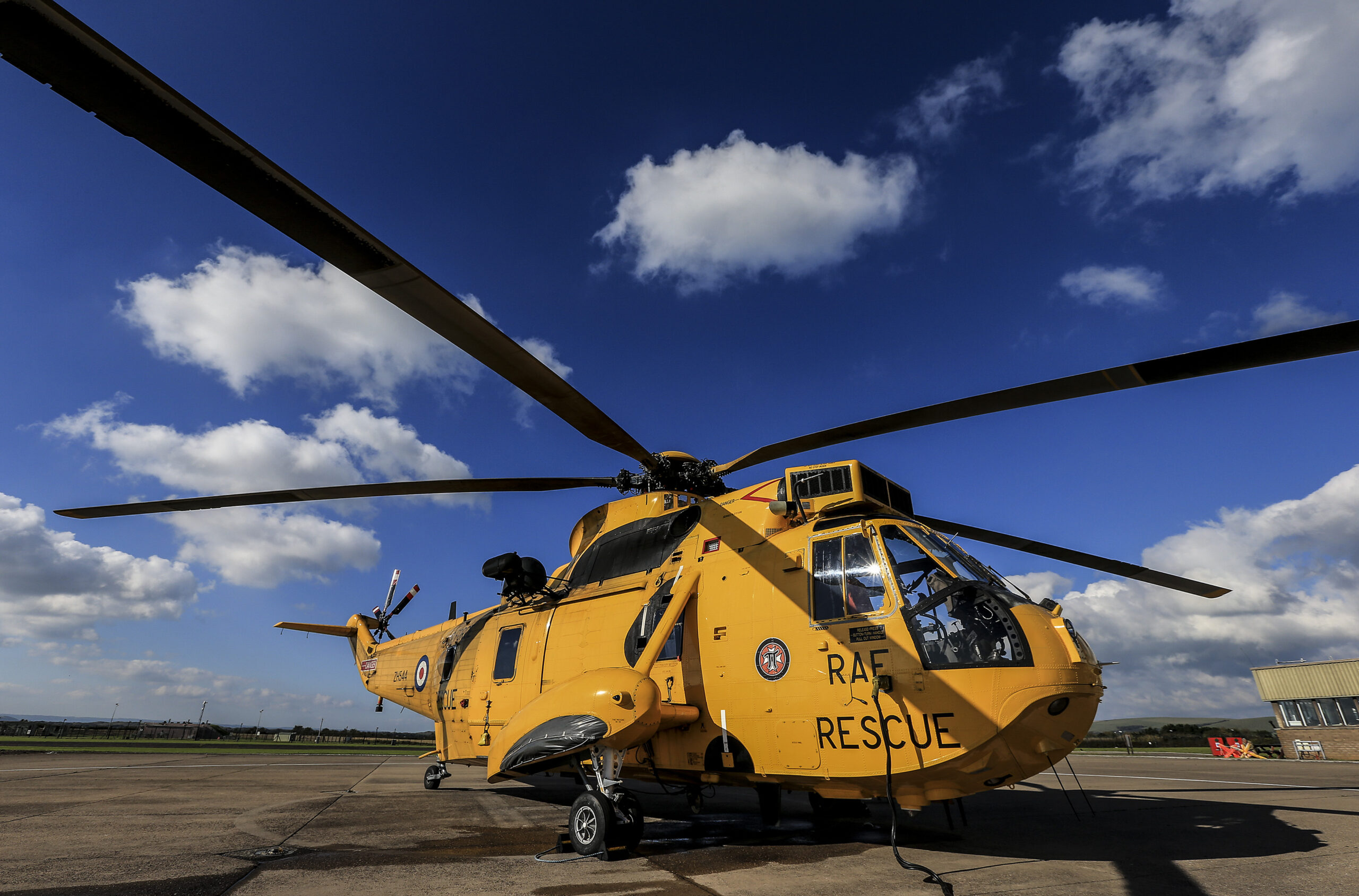
The Royal Air Force Search And Rescue Force, during its existence, saved 26,000 lives. For many, this statistic will conjure images of the iconic yellow Sea King, Wessex, or maybe even the Whirlwind, but nowadays this RAF Search And Rescue legacy is far from just a chapter in a history book. It is a live, evolving mission that continues to save lives today through cutting-edge technology and boots-on-the-ground expertise.
Beyond the Helicopters: The Modern Face of RAF Search And Rescue
While the formal UK helicopter SAR role transitioned to a civilian-contracted service in 2015, and the SAR Force disbanded formally the following year the RAF’s involvement in saving lives remains as vital as ever.
- The Poseidon MRA1: Operating out of RAF Lossiemouth, the Poseidon fleet has taken the “Search” in SAR to a global scale. These maritime patrol aircraft act as high-altitude command centres, using advanced sensors to locate vessels in distress around the UK and across vast tracts of the North Sea that were previously unreachable.
- RAF Mountain Rescue (MRS): The only all-weather frontline SAR capability maintained by the MoD. These teams remain the “gold standard” for rescues in the mountains of the UK, often deploying in conditions where no aircraft can fly alongside the many civilian Mountain Rescue Teams.
- Lowland and Collaborative Rescue: The legacy lives on through the skills passed down to civilian partners and the continued collaboration with volunteer agencies that ensure a seamless “network” of rescue across the UK.
The “On-Call” Reality: A Personal Perspective
Reflecting on this 26,000-life milestone is personal for me. During some of my time in the RAF, I served within the Search and Rescue force, and I can tell you that the “SAR Spirit” is something that stays with you forever.
When you are part of that machine, you live by the “scramble phone”. It decided whether you would get a quiet day or a busy day, and whether you would get to sleep a whole night or not. I remember the unique atmosphere of a SAR flight—the quiet professionalism that instantly shifts into high gear the moment a call comes in. Whether it was 2 PM or 2 AM, the focus was singular: get the right people and the right kit to the person in trouble.
Being part of a team that existed solely to preserve life was the most rewarding experience of my military career. Seeing that 26,000 lives statistic, I’m reminded of the countless hours of maintenance, planning, and training that went into every single one of those “saves.”
A Persistent Mission
The RAF’s SAR legacy isn’t just about the past; it’s about the Mountain Rescue teams currently training in the Highlands and the Poseidon crews currently patrolling the North Sea. It is a persistent commitment to being there when the worst happens.
When we look back on RAF Search And Rescue involvement, it’s clear that while the airframes might change—from the Whirlwind to the Sea King, and now to the Poseidon—the mission remains unchanged.
The Allied Dispatch View
Having seen the SAR operation from the inside, I know that 26,000 lives aren’t just a statistic—it’s 26,000 families that weren’t broken. It is a testament to the RAF’s ability to innovate and maintain a standard of excellence that is respected globally.
To the crews at Lossiemouth, the teams in the MRS, and everyone I had the honour of serving with: that legacy is in safe hands.
Did you know the RAF still maintains such a heavy footprint in Search and Rescue through the Poseidon and MRS? If you have a story of the RAF SAR in action, I’d love to hear it in the comments below.