

Last Updated on June 30, 2026 by Allied Dispatch UK | Published: June 30, 2026
The complete, unredacted text of the government’s £298 billion Defence Investment Plan (DIP) has finally landed on the Whitehall ledger, laying bare the brutal structural trade-offs required to transition the UK onto a high-readiness war footing.
While the Prime Minister’s speech at Malloy Aeronautics focused heavily on the shiny, tech-forward additions—like the headline £5 billion drone transformation and the £15 billion Treasury funding rescue—the published document contains the grim ledger of what is being sacrificed to pay for it.
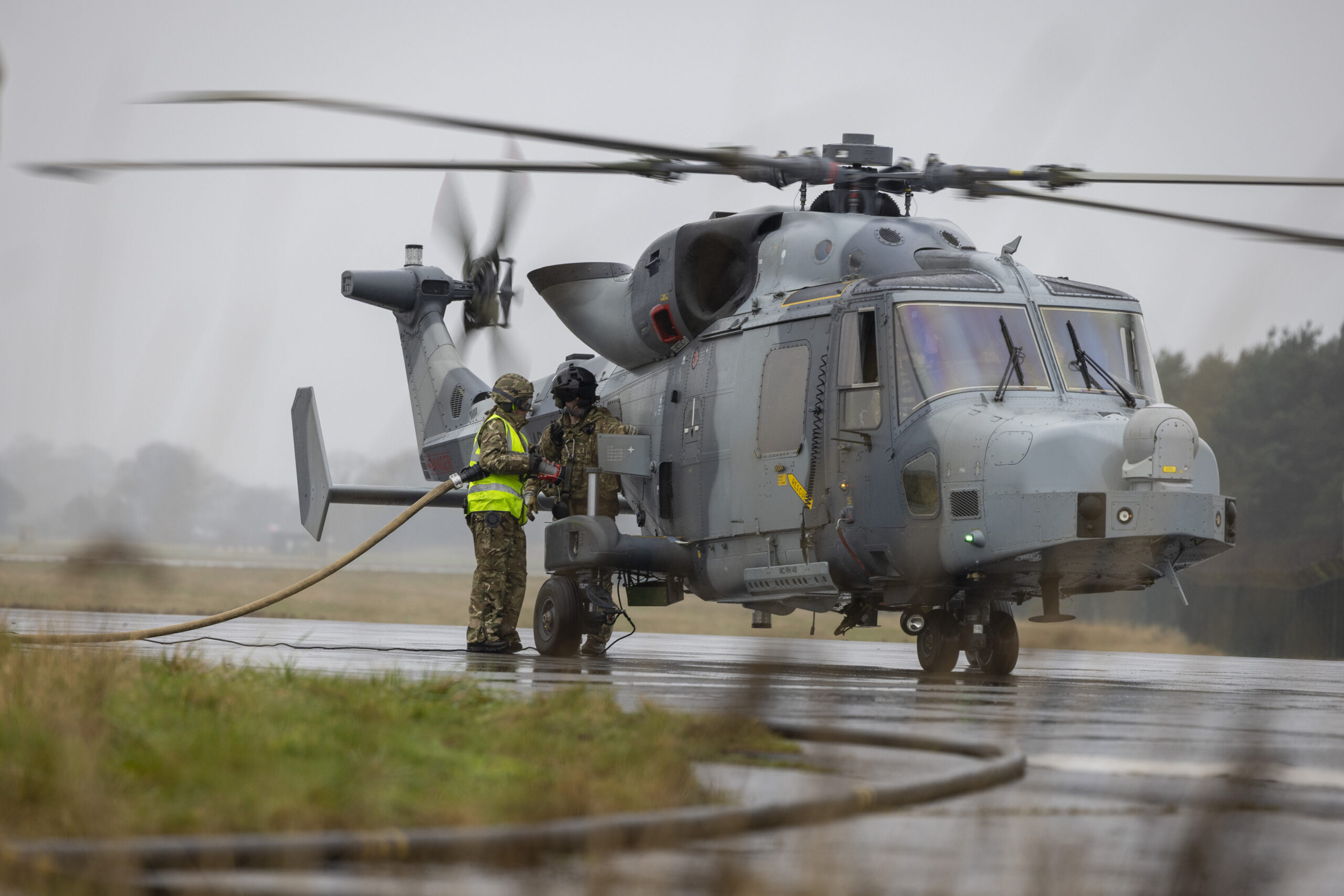
To fund distributed, automated mass, the Ministry of Defence is ruthlessly swinging the axe against legacy crewed platforms. The most dramatic casualty of this doctrinal shift is the formal retirement of a cornerstone battlefield helicopter fleet, marking the moment the MoD officially prioritised digital software over traditional hardware.
The Axe Falls: What is Being Scrapped?
The newly published DIP proves that Defence Secretary Dan Jarvis is willing to accept severe near-term capability gaps to purge the military of platforms deemed “unacceptable liabilities” on a transparent, high-intensity modern battlefield.
The Complete Retirement of the Army Wildcat Fleet
In the most shocking single cull in the document, the British Army’s entire fleet of 34 AW159 Wildcat battlefield reconnaissance helicopters will begin a phased retirement starting in 2027.
- The Doctrinal Reason: Whitehall officials explicitly noted that sending a multi-million-pound crewed helicopter forward over enemy lines to hunt for targets “doesn’t make an ounce of sense” given the lethal density of modern air defences.
- The Replacement: The classical “scouting” role pioneered by the Wildcat will be completely absorbed by the uncrewed systems under the newly established Recce-Strike Concept, shifting the burden of spotting targets onto cheap, expendable drones.
The Accelerated Chinook Drawdown
The heavy-lift rotary fleet is also taking a major hit. The DIP confirms a phased withdrawal of older CH-47 Chinook airframes as they reach the end of their current fatigue lives. Rather than funding costly life-extension packages to keep these vintage heavy-lifters in the air, the MoD is letting them retire to free up maintenance crews and capital for autonomous logistics platforms.
The Death of the Type 83 & Type 32 Programs
As previously rumoured, the document formally slams the door on traditional maritime architecture by cancelling both the Type 83 air-defence destroyer and the Type 32 frigate. The capital lines originally preserved for these heavy steel surface combatants have been entirely redirected to fund uncrewed hulls.
Diversion of Storm Shadow Missile Investment
In another major tactical pivot, the MoD confirmed it is diverting all further investment away from the legendary Storm Shadow cruise missile program.
- The Doctrinal Reason: While Storm Shadow has proven to be an absolute battlefield game-changer in Ukraine, the MoD is electing to run down existing stockpiles early rather than fund further costly upgrades for an ageing airframe that is increasingly vulnerable to next-generation air defence networks.
- The Replacement: Cash from the Storm Shadow line is being aggressively redirected into the Stratus “stealth” missile program (developed with France and Italy) and the hypersonic Deep Precision Strike system (built with Germany), both slated to hit the production lines in the 2030s.
The New Additions: What is Being Fast-Tracked?
To replace the scrapped iron, the DIP locks down legally binding funding pathways for an array of high-tech assets designed to operate in highly contested environments:
- Project NYX & Loyal Wingmen: To fill the void left by the Wildcat, Project NYX will rush up to 24 armed autonomous drones into service by 2030 to act as direct scout-shields for the newly upgraded AH-64E Apache attack helicopters.
- The “Common Combat Vessels” (CCVs): Replacing the Type 83, the Navy will build at least six crewed drone-motherships designed to orchestrate vast multi-domain swarms of uncrewed missile sloops (Type 91), subsurface hunters (Type 92/93), and radar outriders (Type 94).
- The F-35A Nuclear Tranche: The RAF formally secures 12 conventional-takeoff F-35A Lightning II jets to be integrated into 207 Squadron at RAF Marham, locking the UK back into NATO’s Dual Capable Aircraft (DCA) tactical nuclear deterrence mission.
- The Sovereign Munitions Factory Surge: £11 billion of the new settlement is being legally ring-fenced to build six new energetics and ammunition factories across the UK, permanently resetting our depleted industrial baseline for high-intensity artillery and cruise missile production.
- A replacement for HMS Protector by a platform explicitly redesigned for the Arctic and High North.
Allied Dispatch Viewpoint
Let’s strip away the slick corporate language: the formal decision to scrap the entire Army Wildcat fleet is an incredibly cold-blooded, high-stakes gamble. For years, the Wildcat has been the literal eyes and ears of our frontline combat teams. Axing all 34 airframes starting next year is a total, definitive burning of our bridges. The MoD is betting the absolute house on the assumption that digital drone swarms and autonomous sensors can replicate the complex battlefield intuition of a human flight crew in the back of a scouting helicopter.
Tactically, Dan Jarvis is reading the lessons of Eastern Europe correctly. On a modern battlefield thick with shoulder-launched anti-air missiles and automated electronic jamming, a slow-moving, crewed helicopter trying to scout targets by eye is nothing more than an expensive target. Shifting that risk onto expendable uncrewed systems under the Recce-Strike Concept is logical, modern, and financially disciplined.
The Wildcats start retiring in 2027, but the Project NYX autonomous Apache escorts and the full suite of advanced uncrewed reconnaissance platforms won’t achieve true, massed operational capability until 2030 at the absolute earliest. That leaves a highly volatile, three-year window where the British Army will be fundamentally blind in a high-end conventional clash. We are throwing away working, physical hardware today in exchange for a promise of sophisticated digital software tomorrow.
Furthermore, drawing down older Chinooks while simultaneously dodging a firm timeline to hit NATO’s 3.5% GDP conventional target proves that this entire DIP is an exercise in managed resource scarcity. Jarvis didn’t cut these helicopters because he wanted to; he cut them because even with that extra £15 billion Treasury injection, the MoD simply does not have the cash or the human personnel to maintain a heavy conventional transport fleet while simultaneously building a digital navy.
We are building a highly innovative, incredibly lethal boutique force. But if a major Article 5 conflict erupts before the end of the decade, you cannot hold an international border with an abstract concept. If our new drone swarms face heavy electronic warfare and lose connectivity before our replacement infrastructure is ready, we will look back at the day we scrapped our crewed scouting fleets as the moment Whitehall chose high-tech PR over basic military survival.
What is your reaction to the published details of the Defence Investment Plan? Is the government right to completely scrap the Army’s Wildcat helicopter fleet in favour of autonomous drones, or has the MoD left the military dangerously blind ahead of the 2030 deployment timelines? Let us know your perspective in the comments below.