

Last Updated on April 30, 2026 by Allied Dispatch UK | Published: April 30, 2026
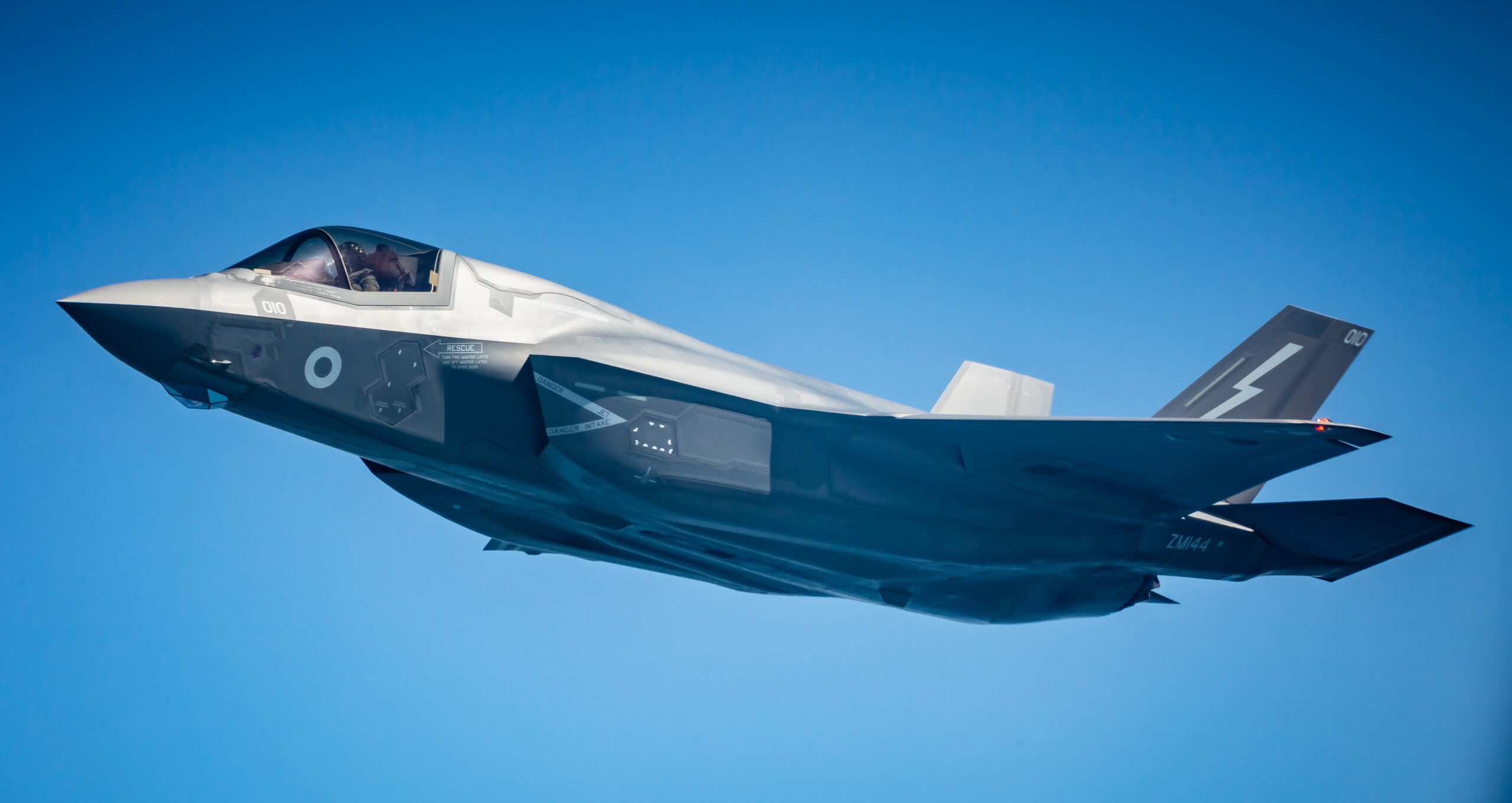
The UK’s 5th-generation combat capability just took a significant leap forward with the touchdown of aircraft BK48 at RAF Marham. This arrival completes the Initial Procurement Phase of the F-35B programme for the United Kingdom.
The delivery of the final three jets in this batch, BK46, BK47, and BK48, brings the UK’s total operational fleet to 47 aircraft.
A Transatlantic Journey
Lockheed Martin delivered the three newest jets from their assembly line in Fort Worth, Texas. To reach their home base in Norfolk, the aircraft performed a transatlantic crossing supported by a Voyager air-to-air refuelling tanker from RAF Brize Norton, ensuring the stealth fighters arrived safely without stopping.
The Backbone of UK Air Power
The F-35B is uniquely capable of Short Take-Off and Vertical Landing (STOVL), allowing it to operate in versatile environments:
- Carrier Strike: These jets form the primary “teeth” of the UK’s Carrier Strike Groups, operating from the decks of HMS Queen Elizabeth and HMS Prince of Wales.
- Land-Based Defence: When not at sea, the fleet is stationed at RAF Marham, ready to deploy globally at a moment’s notice.
- Advanced Stealth: The platform combines cutting-edge stealth technology with advanced sensors to provide unmatched situational awareness.
Future Outlook: The Road to 138
While this completes the first phase of aircraft, the UK government has recently reaffirmed its commitment to a long-term goal of 138 F-35 aircraft over the programme’s life.
Future tranches are expected to include the latest Block 4 software and hardware upgrades, which will enable the integration of next-generation UK weapons like the SPEAR 3 cruise missile and the Meteor air-to-air missile..
A Reminder of the Risks: The Mediterranean Loss
The initial goal was for the first batch to be 48 operational aircraft. One more than the UK currently has operational. The gap in the fleet is the result of a high-profile accident in November 2021, involving aircraft ZM152 (BK-18). During an attempted launch from HMS Queen Elizabeth in the Mediterranean, the jet suffered a sudden loss of power on the takeoff roll and ditched into the sea.
A subsequent investigation determined the crash was caused by a simple engine intake blank—a protective cover used while parked—that had been sucked into the engine, blocking critical airflow. While the pilot was safely recovered with only minor injuries, the aircraft was deemed a total loss after being salvaged from a depth of over 2,000 meters. This incident serves as a stark reminder of the immense complexity and zero-margin-for-error nature of operating 5th-generation stealth fighters at sea.
How do you see the Lightning Force evolving? Is a 138-jet fleet the right ambition for the UK’s future defence?