

Last Updated on April 28, 2026 by Allied Dispatch UK | Published: April 28, 2026
AUKUS, the UK’s most ambitious defence partnership in a generation, is at risk of “derailing” due to a lack of visible leadership from the Prime Minister and critical failings in infrastructure, a scathing new report from the House of Commons Defence Committee has warned.
Published today, April 28, 2026, the report paints a picture of a landmark deal that is hitting “bumps in the road” before the first steel for the new SSN-AUKUS submarines has even been fully realised.
The “Leadership Vacuum” at the Top
The Committee, chaired by Tan Dhesi MP, is blunt: AUKUS cannot be treated as “just another defence programme.” The report calls for the Prime Minister to take a much more visible role, warning that without high-level political “grip” within Whitehall, the cross-government coordination required for such a massive project will fail.
The Committee found that political impetus has “dwindled,” leading to a sense of “political drift” that threatens to undermine our standing with trilateral partners in Australia and the United States.
Submarine Availability: A “Critically Low” Crisis
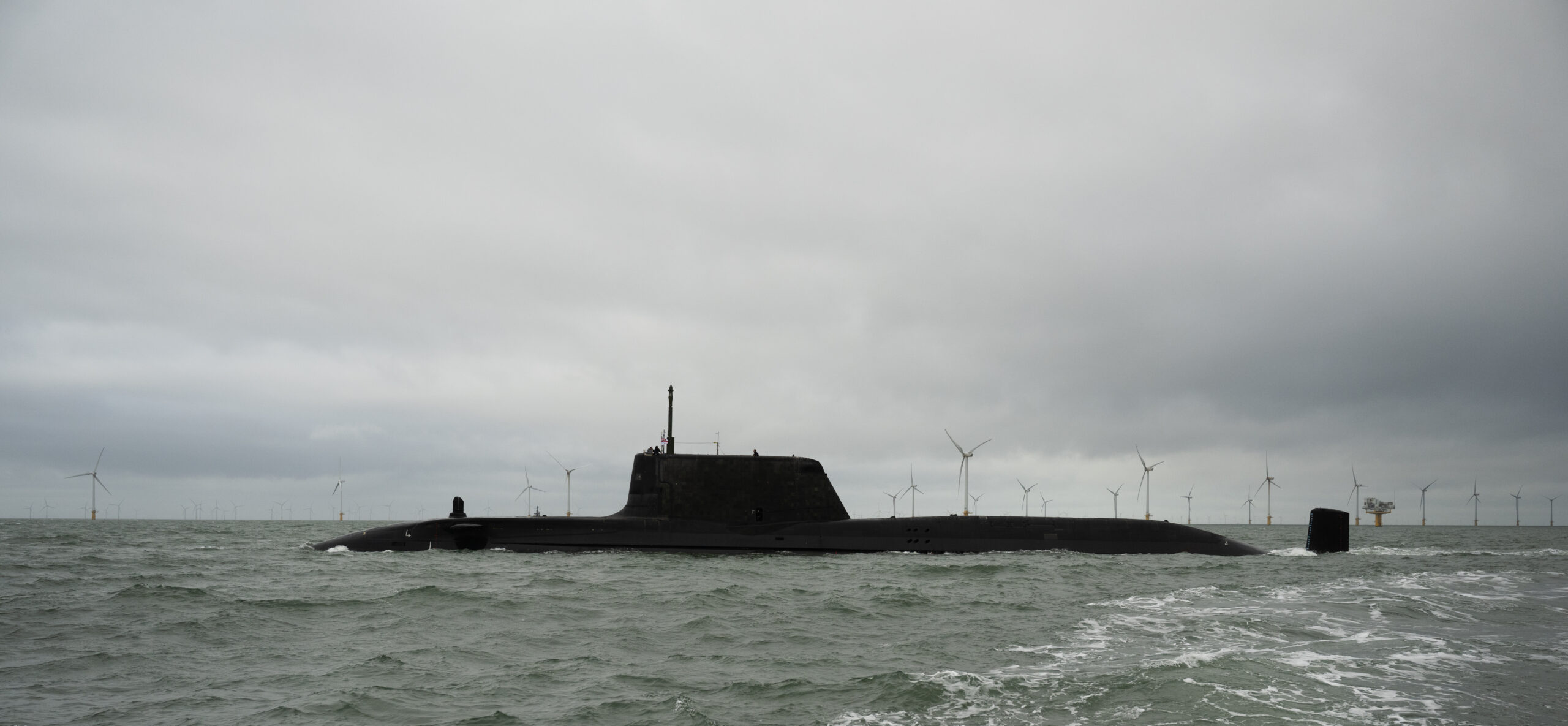
For readers of Allied Dispatch, the hardware section of the report is the most concerning. AUKUS Pillar 1 relies on the UK’s ability to project power via nuclear-powered submarines (SSNs). However:
- Submarine availability is described as “critically low.”
- The Royal Navy is struggling to meet current obligations, let alone the increased requirement for submarine visits to Australia.
- Infrastructure Failure: The report warns that without “urgent” improvements at HMNB Devonport and HMNB Clyde, the UK will be physically unable to meet its AUKUS obligations.
The “Barrow” Bottleneck
Barrow-in-Furness remains the beating heart of the UK’s submarine build capability, but the Committee warns that the town’s regeneration is “too big to fail.” Success depends on attracting a massive, skilled workforce to BAE Systems, yet the investment pipeline has already “faltered.”
The report also suggests an “AUKUS Visa” to allow easier movement of workers between the UK, US, and Australia—addressing the “bottlenecks” currently slowing progress.
Pillar 2: High Tech, Slow Delivery
While Pillar 1 is about submarines, Pillar 2 focuses on advanced technology like AI and hypersonics. The Committee describes its start as “disappointing,” calling for tangible results to be delivered to the “warfighter” urgently to restore the project’s credibility.
The Allied Dispatch View
This report mirrors the concerns we have heard recently about defence as a whole. Whether it’s the “Home Front” resilience or “Deep Sea” nuclear capability, the recurring theme is complacency.
We have the ambition, and we have the partners, but as the Committee rightly points out, “cracks are already beginning to show.” If the UK wants to be taken seriously as a global defence leader, it needs to stop treating AUKUS as a press release and start treating it as a national emergency.
What do you think? Is the Government moving too slowly on AUKUS, or is the Defence Committee being overly pessimistic? Join the conversation in the comments below.