

Last Updated on April 27, 2026 by Allied Dispatch UK | Published: April 27, 2026
A new era of maritime cooperation has been formalised as Norway officially joined the UK, Australia, and Canada in the Global Combat Ship (GCS) User Group, creating a unified fleet of 34 advanced warships dedicated to securing the North Atlantic, Europe’s Northern Flank, and Indo-Pacific.
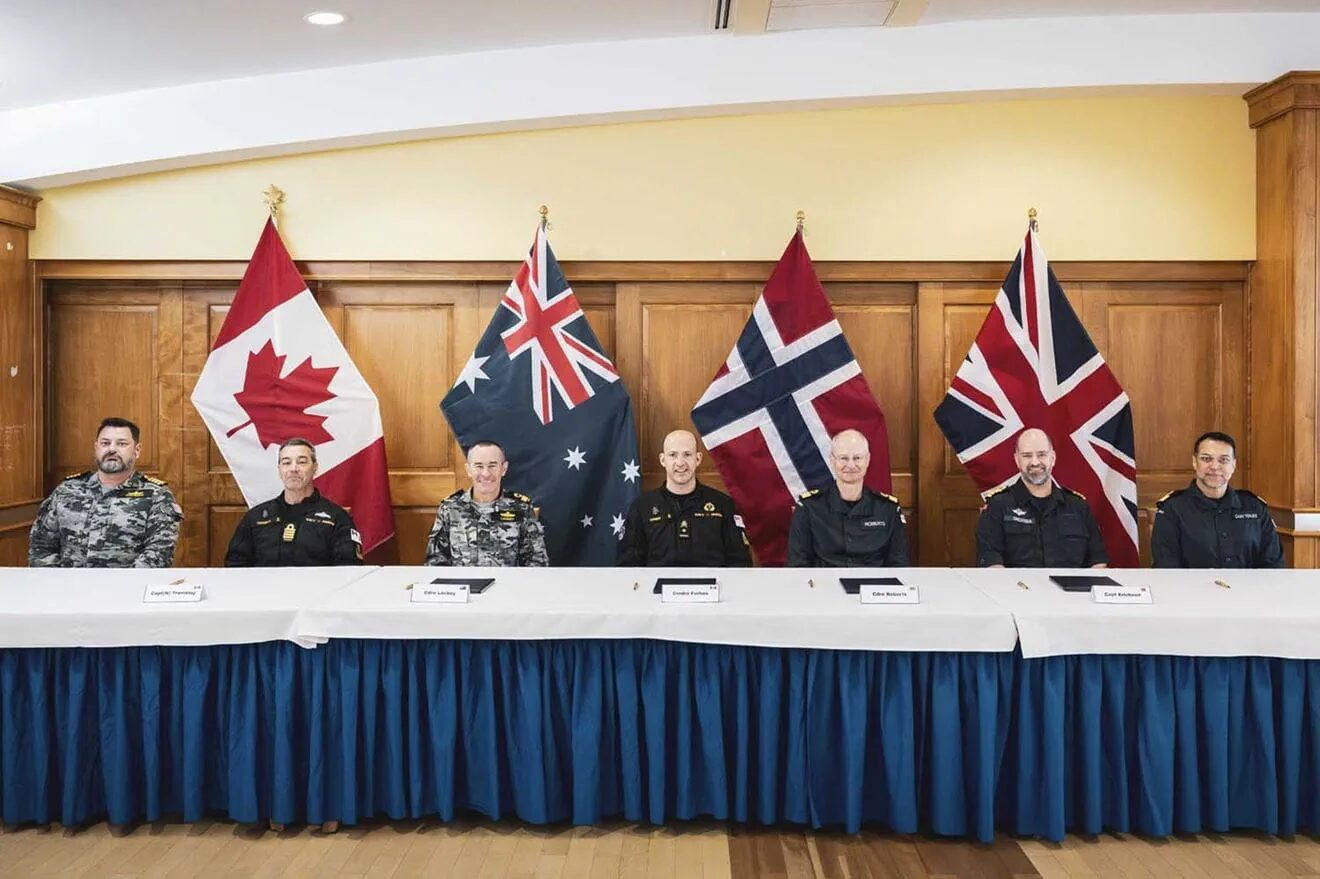
The move, confirmed by the Royal Navy today, saw Captain Alex Erichsen of the Royal Norwegian Navy sign the GCS Charter in Halifax, Nova Scotia. This landmark agreement cements Norway as the fourth “Tier 1” partner in the development and operation of the Type 26 frigate design—known in the UK as the City-class.
A ‘Wall of Sonar’ Across the High North
For Norway, the decision to align with the UK’s Type 26 programme is driven by the escalating submarine threat in the High North. By adopting the same platform as the Royal Navy, Norway ensures total interoperability with its closest NATO ally.
This means that in a future conflict, Norwegian and British crews will operate nearly identical systems, can share spare parts, and use the same training pipelines. For the Royal Navy, having a “Type 26-standard” ally on the doorstep of the GIUK Gap (the Greenland-Iceland-UK gap) is a massive strategic advantage in the hunt for Russian quiet-running submarines.
The Global Fleet of 34
With Norway’s entry, the Global Combat Ship programme now oversees a staggering 34-ship production pipeline:
- United Kingdom: 8 City-class frigates (currently under construction at BAE Systems on the Clyde).
- Australia: 6 Hunter-class frigates.
- Canada: 15 River-class destroyers.
- Norway: Minimum of 5 future frigates based on the GCS design.
Industrial and Strategic Strength
The signing took place during a summit where naval leaders also got the chance to see the progress on the first Canadian River-class vessel, HMCS Fraser.
Commodore Stephen Roberts, the Senior Responsible Owner for the UK Type 26 Frigate Programme, said: “Our strategic maritime security partnership with allies is further strengthened by Norway’s inclusion in the wider GCS enterprise alongside our Canadian and Australian partners.”
What This Means for the UK
For the British defence industry, Norway’s inclusion is a major validation of BAE Systems’ design. It secures the UK’s position as a global leader in maritime engineering and ensures that the Type 26 remains the most advanced anti-submarine platform in the world.
As the first of the UK’s City-class frigates, HMS Glasgow, moves closer to its commissioning date, the news that its Norwegian counterparts will be sailing alongside it ensures a unified Allied presence on Europe’s northern flank for decades to come.