

Last Updated on April 24, 2026 by allieddispatch | Published: April 24, 2026
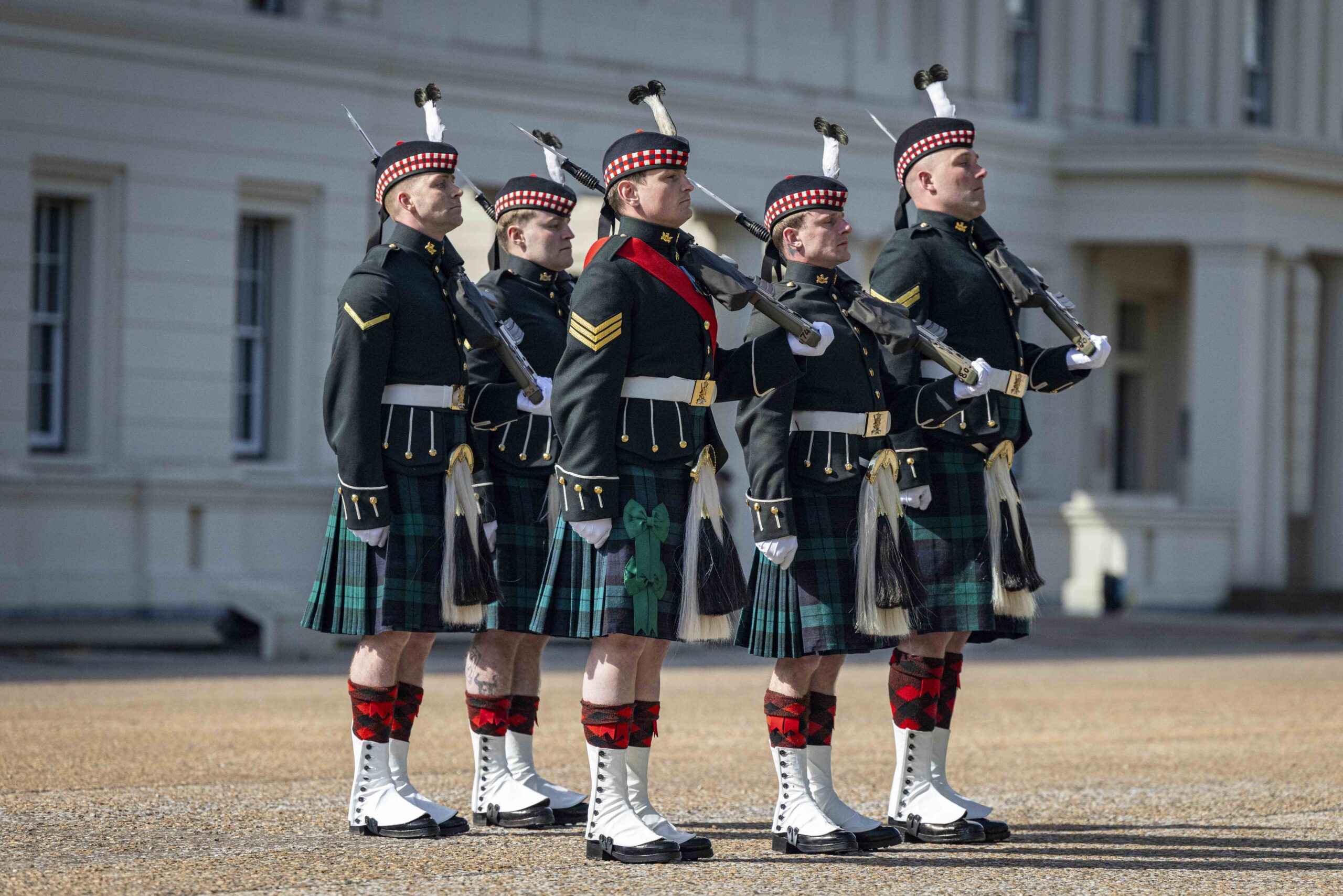
The melodic drone of the pipes and the unmistakable sight of the kilt have returned to the streets of London. Balaklava Company, 5th Battalion The Royal Regiment of Scotland (5 SCOTS), has officially taken up its role as the King’s Guard, marking their second deployment to the capital in just six months, but this time, they have brought their full ceremonial heritage with them.
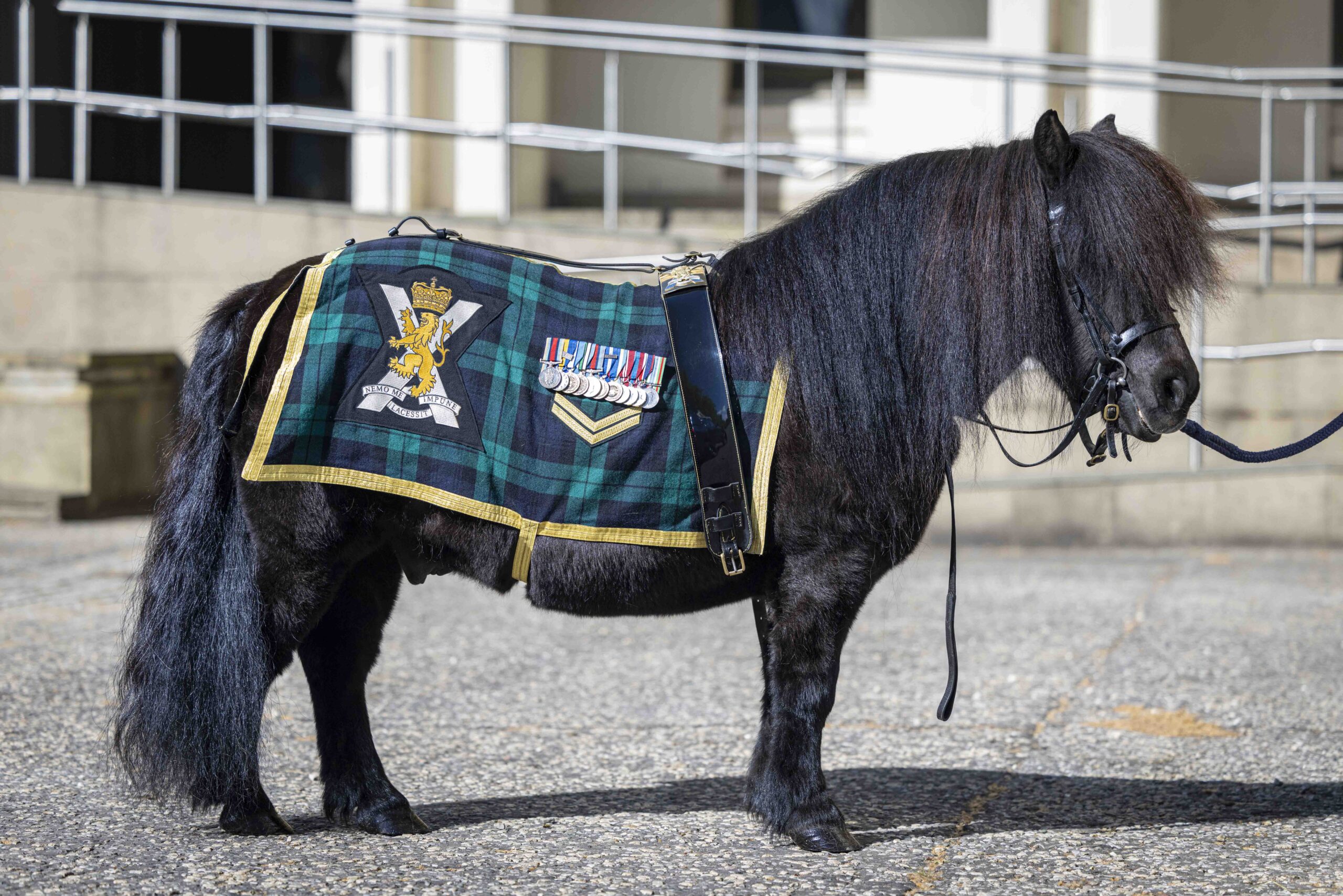
Stepping off from Wellington Barracks earlier this week, the Company marched to Buckingham Palace, accompanied by their famous Shetland pony mascot, Corporal Cruachan IV, to commence their duties at the nation’s most iconic landmarks.
Fit for the Role: The Inspection
Before taking up their posts at Buckingham Palace, St James’s Palace, and the Tower of London, the troops underwent a rigorous inspection at Redford Barracks. The evaluation, conducted by the Household Division’s leadership, ensured the highest standards of drill precision and uniform.
- Exceptional Standards: Lieutenant Colonel Charles Foinette of the Household Division praised Balaklava Company, noting they demonstrated they were “more than up to the job” of meeting the exacting standards required for the King’s Guard.
- Pipes and Drums: The visual spectacle will be matched by a musical one, as the Pipes and Drums of 4 SCOTS are set to support guard mounts over the coming weeks, bringing the unique sounds of the Highlands to the capital.
Balancing Public and Operational Duties
For the soldiers of 5 SCOTS, the transition from tactical “combats” to ceremonial kilts is a point of professional pride. Major Tommy Blair, Officer Commanding Balaklava Company, emphasised that representing Scotland and the Regiment in London is a “great honour.”
The deployment highlights the versatility of modern infantry units, who must remain “operationally ready” for global deployments while maintaining the discipline required for the world’s most-watched ceremonial duties.
Allied Dispatch Viewpoint: Heritage as a Force Multiplier
At Allied Dispatch, we believe that anything that boosts the morale and public standing of our Armed Forces is a net positive. While the modern battlefield is increasingly defined by technology and uncrewed systems, the “soft power” of British military heritage remains a vital strategic asset.
The return of the kilt to London is more than just a tourist attraction; it is a display of the discipline and professionalism that defines the British Army. These ceremonial traditions anchor our regiments in their history and build the public support that is essential for a healthy defence budget. Seeing 5 SCOTS at Buckingham Palace reminds us that our military is not just a fighting force, but a living part of the nation’s identity.
What do you think?
- Ceremonial vs. Operational: Does the time spent on “public duties” like this help or hinder a regiment’s combat readiness?
- Regional Representation: How important is it to see specific regional regiments, like the Royal Regiment of Scotland, guarding the capital?
- The Cruachan Effect: Does the presence of mascots like Corporal Cruachan IV help the public connect more effectively with the military?